Spatial audio uses information about sound sources and a listener to create the impression that sound comes from positions or directions in space.
A voice can belong to an object
Imagine a sound associated with one sculpture. As the visitor turns or moves, its apparent direction and level can change according to the chosen audio model. A spatial audio system may consider source position, listener orientation, distance and directionality. A stereo recording alone does not automatically provide head-tracked or world-anchored sound.
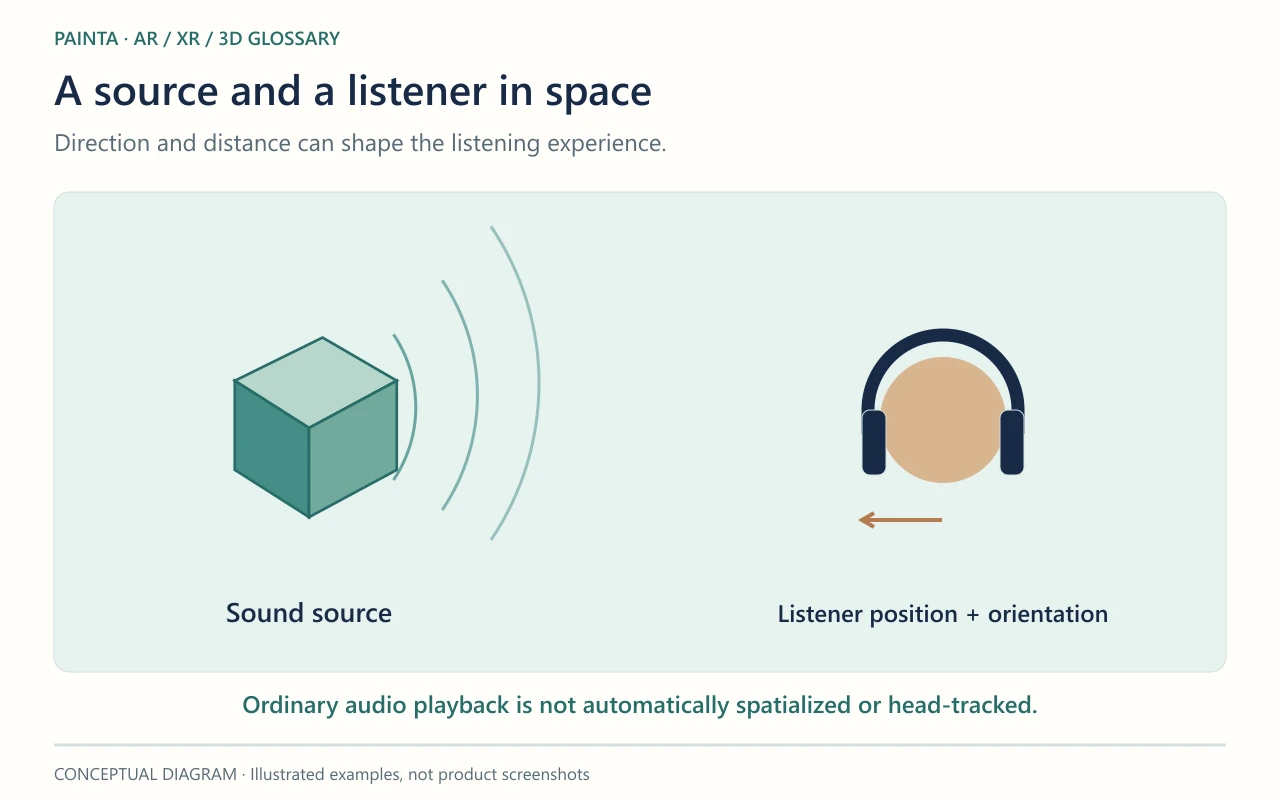
The playback setup changes the experience
Headphones can help deliver directional cues, while phone speakers and room loudspeakers produce different results. Occlusion, reverberation and room acoustics require additional modelling or design; placing a source in 3D does not automatically simulate all of them. Hearing differences and noisy galleries also make a visual or text alternative valuable for essential information.
Start with the artistic purpose
An artist’s voice beside a work, a moving creature or a sound trail can each call for a different approach. For a Painta concept, distinguish ordinary audio playback from spatialized audio and confirm what the intended viewer supports before making it central to the experience. Keep an accessible transcript or equivalent interpretation for spoken content that visitors need to understand.