Scale is a transform that multiplies an object’s size along one or more axes.
A multiplier, not a measurement
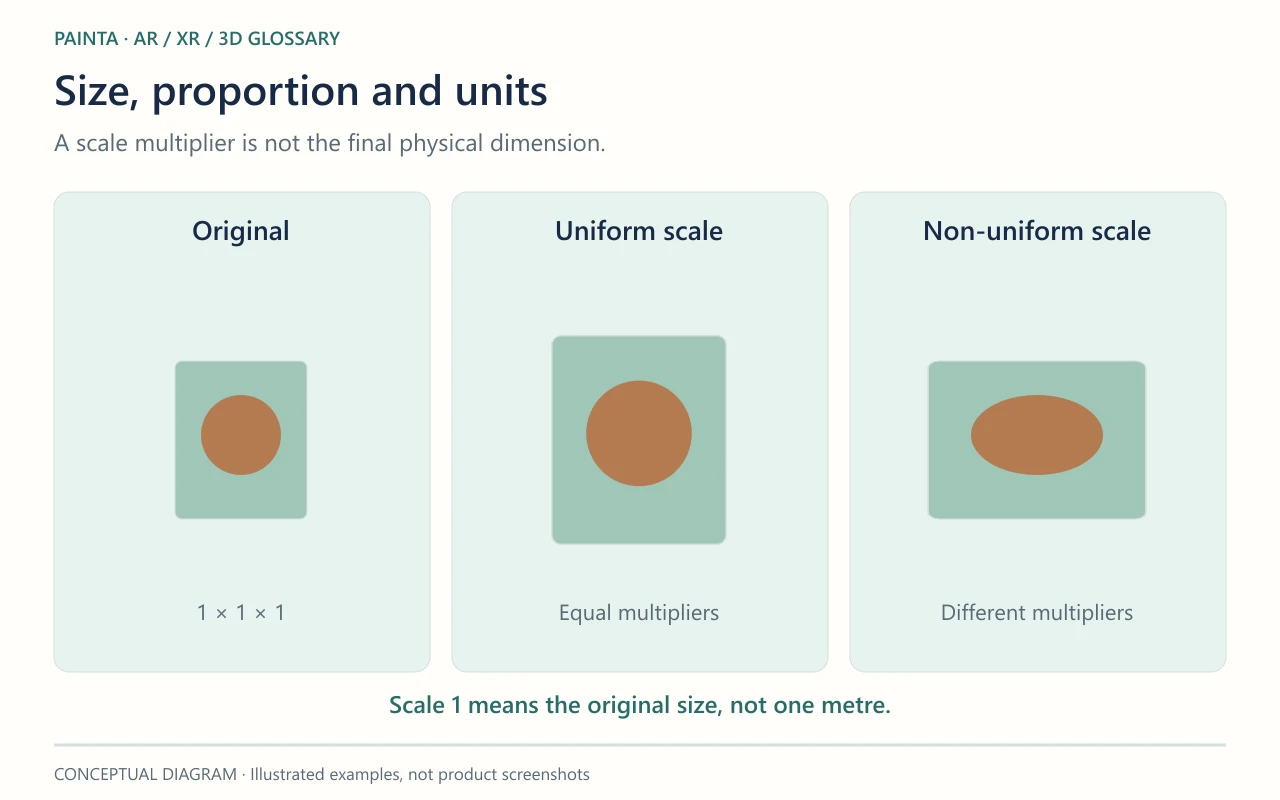
A scale value of 1 means no scaling relative to the object’s underlying geometry. It does not mean the object is one metre tall. A model built two units high remains two units high at scale 1. Uniform scaling uses the same multiplier on every axis; non-uniform scaling uses different multipliers and can change the proportions.
Why stretching is not always the right fix
Making a figure wider on one axis can also stretch its surface detail and alter how an animation deforms. Negative scale can mirror an object and may introduce orientation or shading complications. Parent scale matters too: a child with scale 1 can still appear enlarged because a parent is scaled. Inspect the whole chain when sizes seem inconsistent.
Matching a digital addition to physical art
In a Painta project, use scale to fit an imported element to the intended composition, while keeping a known physical dimension as a reference. If the model should represent an actual object, verify its final dimensions rather than trusting the scale fields alone. The diagram contrasts proportional enlargement with stretching, making clear why both can increase width but produce different results.