Real-world scale is the relationship between distances in a digital scene and measured distances in the physical world.
One unit needs a meaning
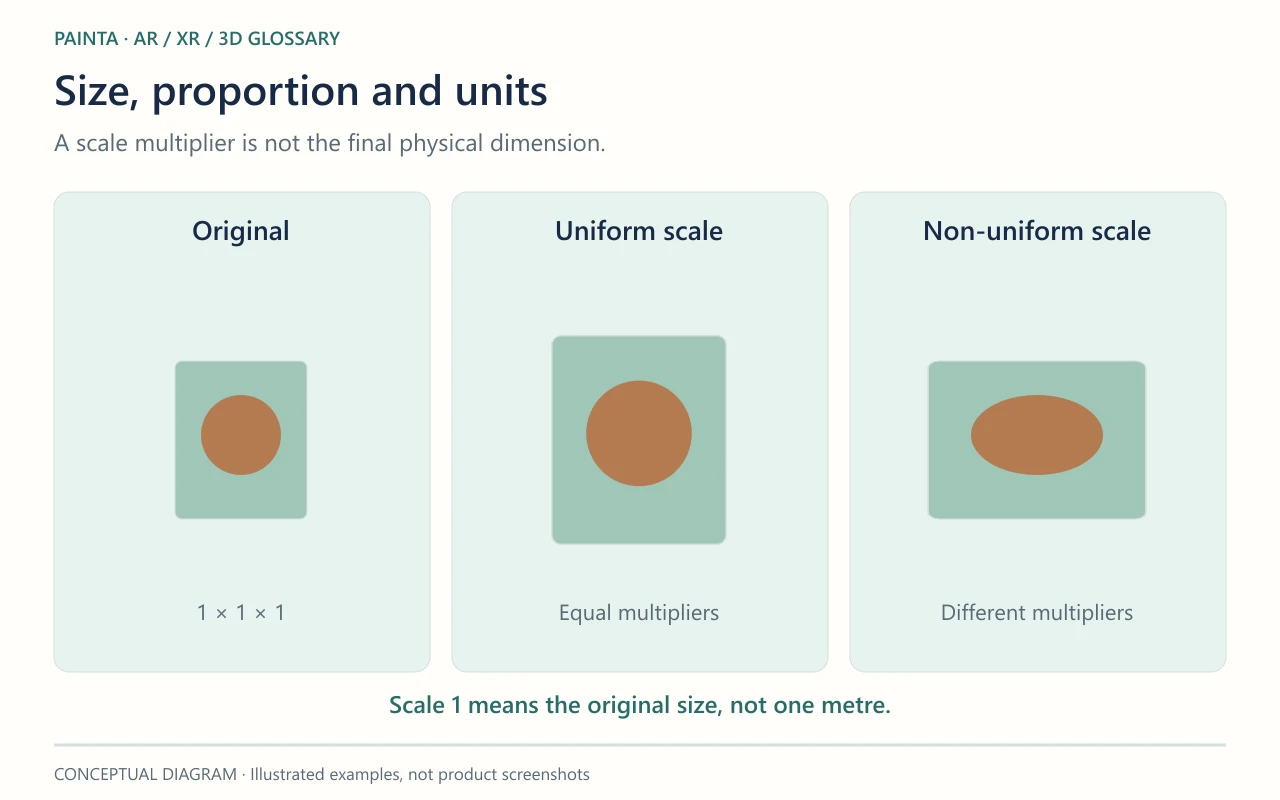
A 3D model can be internally consistent and still arrive a hundred times too large if centimetres are interpreted as metres. glTF defines linear distances in metres, but the authoring and export process still needs to convert the source correctly. A scale multiplier and a displayed unit label do not independently prove the final physical size.
Measure something you can recognise
Choose a reliable reference, such as the known height of a sculpture or the width of a frame. Measure the exported model, then check it in the actual viewing context. A beautiful screenshot can hide a size error because the camera can move closer or farther away. For an exhibition, compare the digital object with a measured physical reference at the venue.
Scale in an artwork-led experience
When preparing content for Painta, distinguish an artistic exaggeration from an accidental unit mismatch. A flower growing larger than its canvas may be deliberate; a museum replica intended to communicate object size needs a more exact relationship. Tracking configuration and physical target dimensions can also affect perceived alignment. Document the intended dimensions so another person can reproduce the setup.