A digital replica is a digital representation of a physical object or place, made for a stated purpose such as interpretation, visual exploration, documentation or measurement.
Start with the purpose
A replica for a visitor to rotate on a phone may prioritise appearance and speed. A record used to monitor a sculpture's condition may need documented scale, repeatable capture and much greater geometric accuracy. Calling both a replica does not make their evidence equivalent.
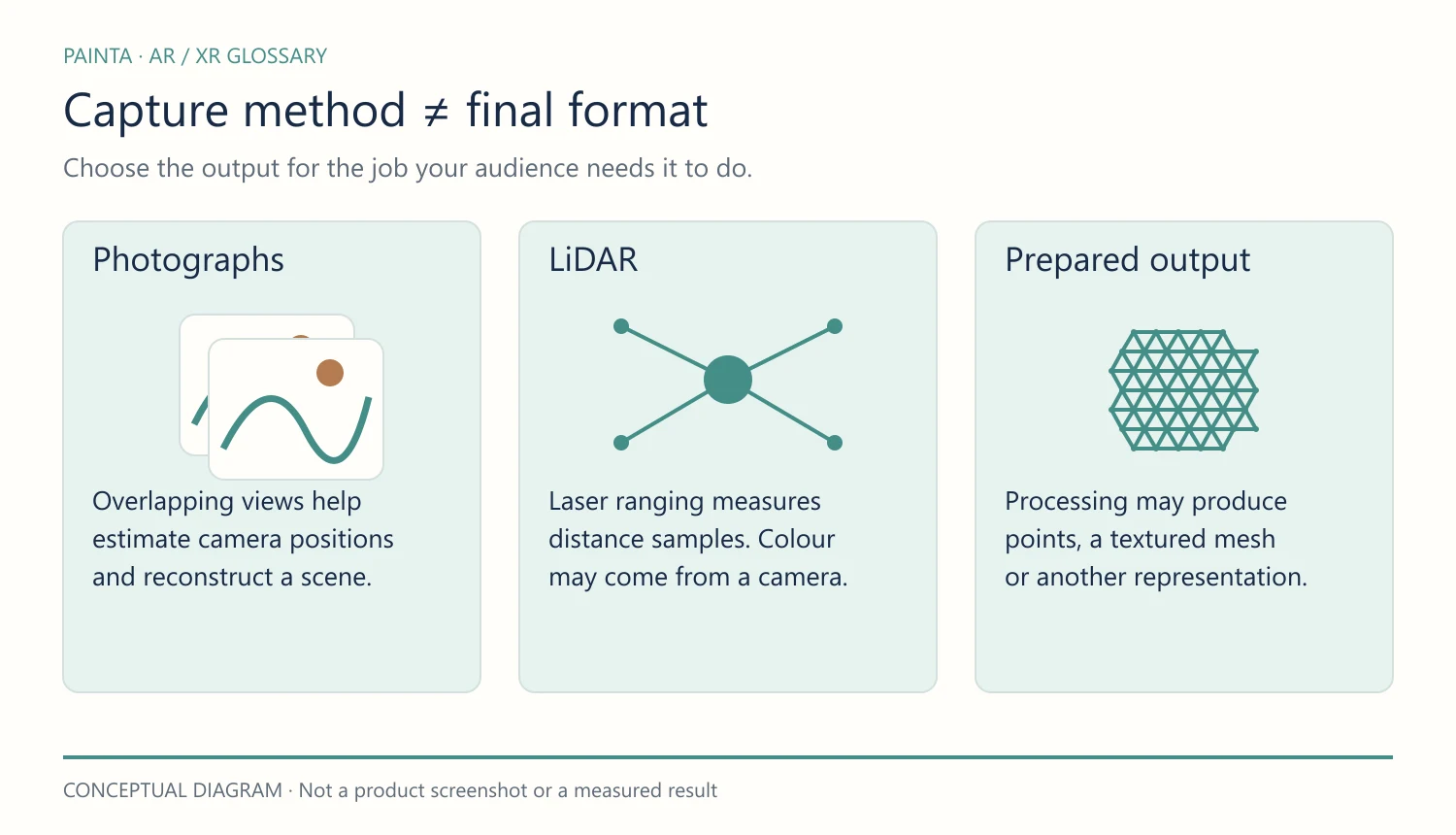
What can be preserved?
Depending on the method, a capture may record visible shape, surface appearance and the arrangement of an installation. It does not automatically preserve weight, touch, smell, material behaviour, provenance or the experience of sharing a room with the original.
Keep a record of the decisions
Save capture dates, equipment, processing choices, rights information and the source files. Explain where geometry was repaired or surfaces were reconstructed. A plausible missing detail should not silently become a historical claim.
A useful role in a Painta project
A prepared digital asset can support an interpretive layer around a physical work. The replica and the interpretation should remain distinguishable: one represents the object, while the other explains or reimagines it. A digital twin is a related term, usually implying an ongoing connection to the state or behaviour of its physical counterpart.
Related concepts and further reading
What a digital replica can and cannot preserve