Physically based rendering is a family of shading methods that approximate how light interacts with materials using physically motivated rules.
A shared language for surfaces
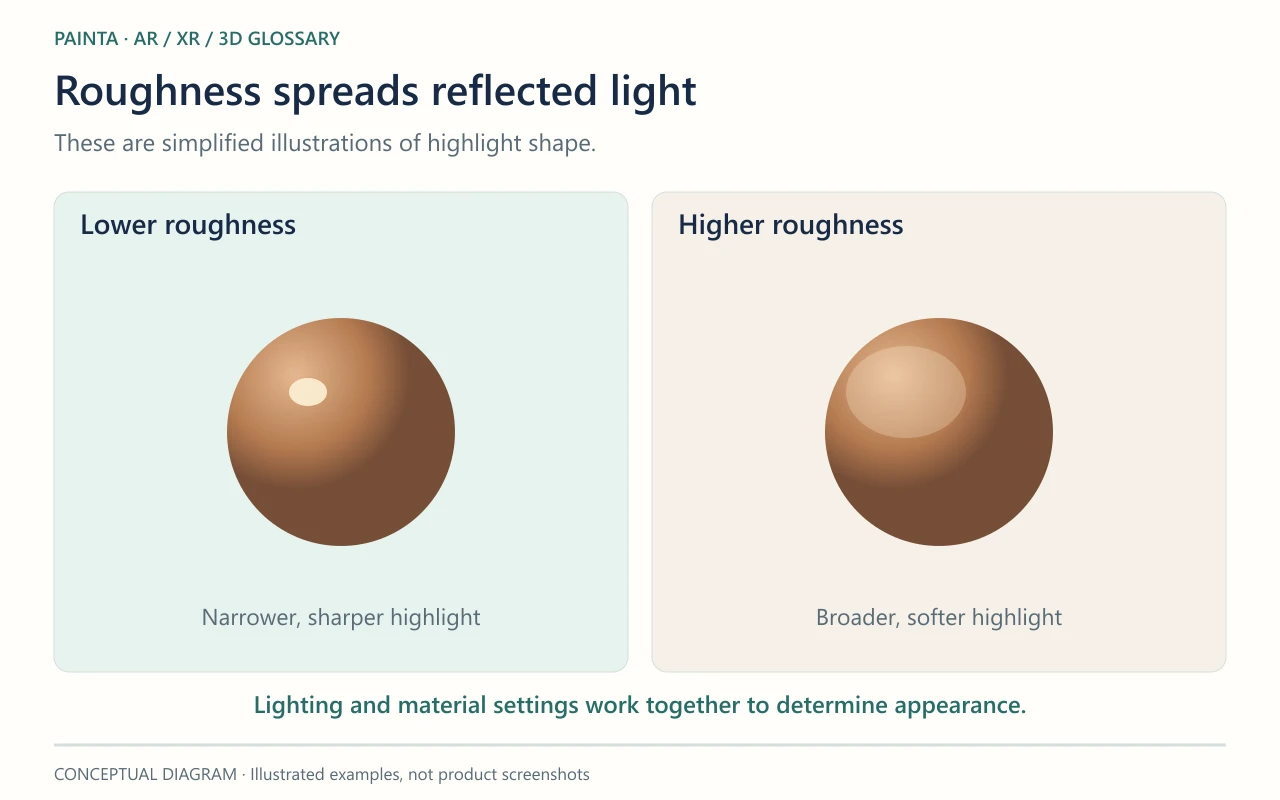
PBR helps describe whether a surface behaves more like metal, rough ceramic or smooth plastic. The metallic-roughness model used by core glTF combines base colour, metallic and roughness properties with lighting. Roughness changes the spread of reflected light; it is not simply a brightness slider. A rough metal can still be reflective, but its reflections are less sharp.
PBR does not guarantee a photographic result
Geometry, texture quality, lighting, exposure and the viewing environment all affect the image. A material that looks convincing under studio lighting may look different in another viewer. PBR also does not mean that every feature available in a desktop renderer is supported by every browser or file export. Extensions and advanced materials need explicit compatibility checks.
Choosing what matters for a replica
For an artwork prepared for Painta, decide whether the surface should preserve captured colour or respond strongly to scene lighting. A scanned object with shadows already baked into its colour can look doubly shaded when lit again. Compare the result with reference photographs and test the exported asset under the actual viewer lighting before approving the appearance.
Related concepts and further reading
Khronos: physically based rendering