A target image is a prepared visual reference that an AR system uses to recognise a physical image and, when supported, estimate its position and orientation.
The artwork can be the target
A target does not have to look like a technical barcode. It might be a painting, a print, a book illustration or a poster. The system looks for recognisable visual features, then relates the digital content to that reference.
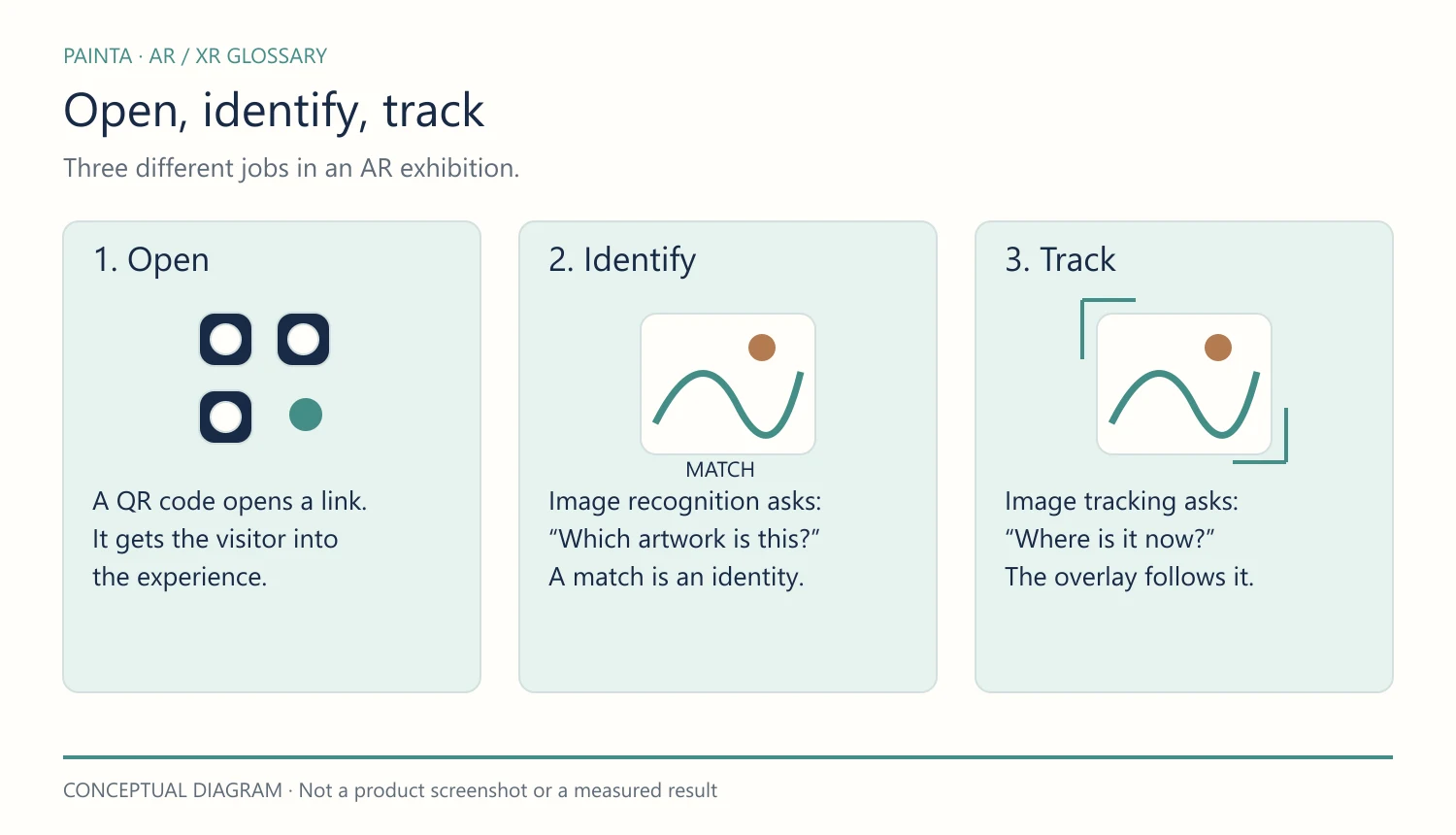
A Painta example
For an image-tracked artwork, the reference should correspond to what visitors will actually point their cameras at. If the displayed print is heavily cropped or substantially altered, it may no longer match the reference well.
What makes a useful reference?
Sharp, varied detail is generally more helpful than a large flat area or a repeating pattern. Capture the image square-on, with consistent lighting and without glare. The surrounding frame, room or wall should not accidentally become the most recognisable part of the reference.
A target is not the QR entry point
The QR can open the experience; the target helps it align to the artwork. Before an exhibition, test the final physical version at realistic viewing distances rather than relying only on a preview on another screen.
Related concepts and further reading
Collections and Scan in an exhibition