Image recognition identifies or classifies what appears in an image. In an art experience, it can help match a visitor's photograph to a known artwork.
Identity comes before alignment
Recognition answers a question such as “Which work am I looking at?” It may return a likely match, several candidates or no match. Continuous tracking is a different task: it estimates where the work is relative to the camera as the viewer moves.
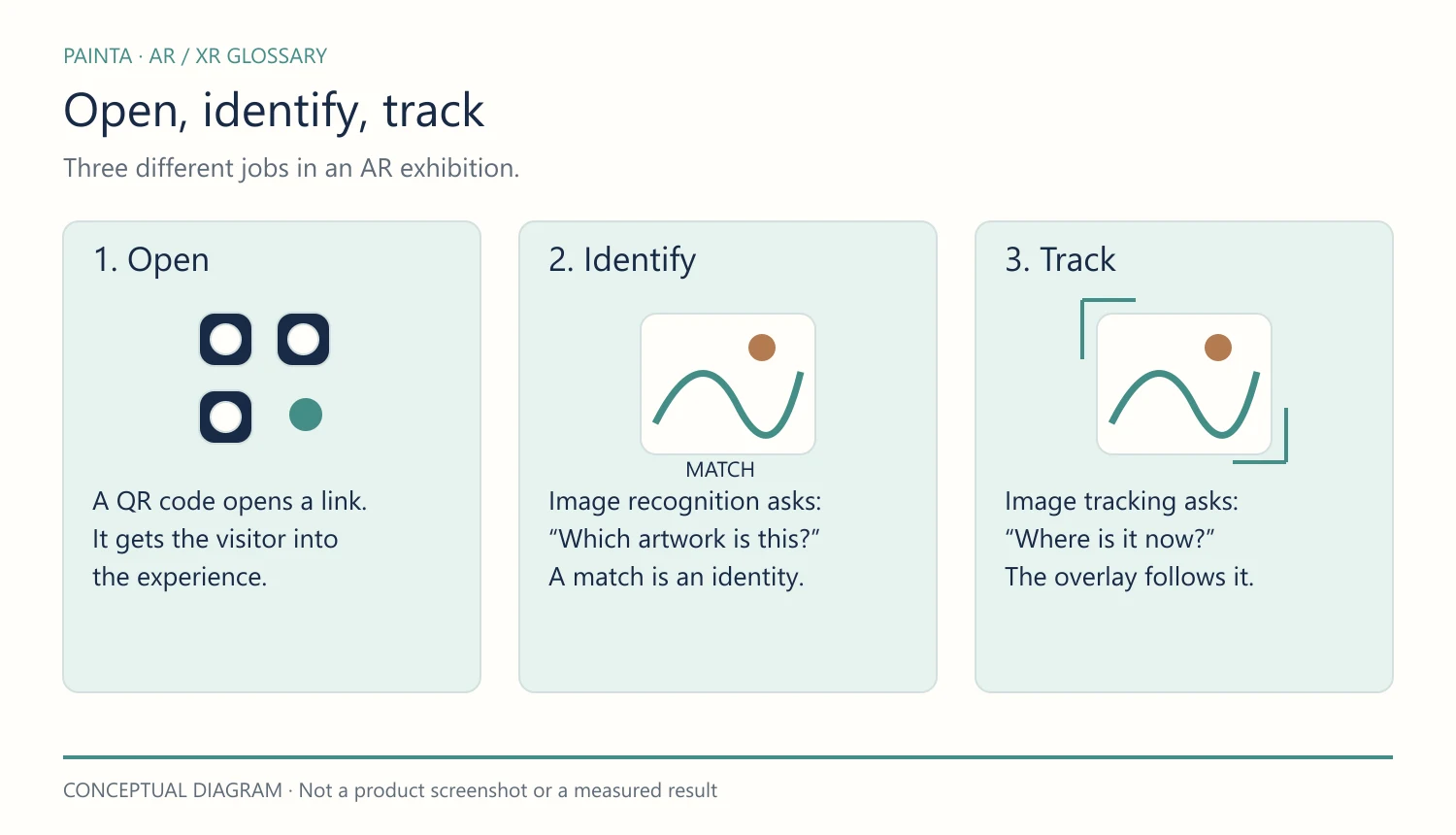
An example with Painta Scan
A visitor can use Scan to photograph an artwork and look for a match. An artist-specific Scan narrows the search to that artist's eligible works. It should not be described as a room-specific or collection-specific recogniser unless that exact scope is supported.
When a collection makes more sense
A curated collection gives visitors a defined group of works and navigation between them. That can be the clearer entry point for a room or an exhibition route. Recognition is useful when the visitor starts with the physical work and needs help finding its digital destination.
Why a match can fail
A poor photograph, glare, a partly hidden image or visually similar works can reduce confidence. Good visitor instructions and a fallback route matter. Recognising an artwork also does not establish authenticity, ownership or permission to reproduce it.