A QR code is a two-dimensional barcode that stores data, commonly a web address. In an AR exhibition, it can give visitors a quick way to open an experience.
The code opens the door
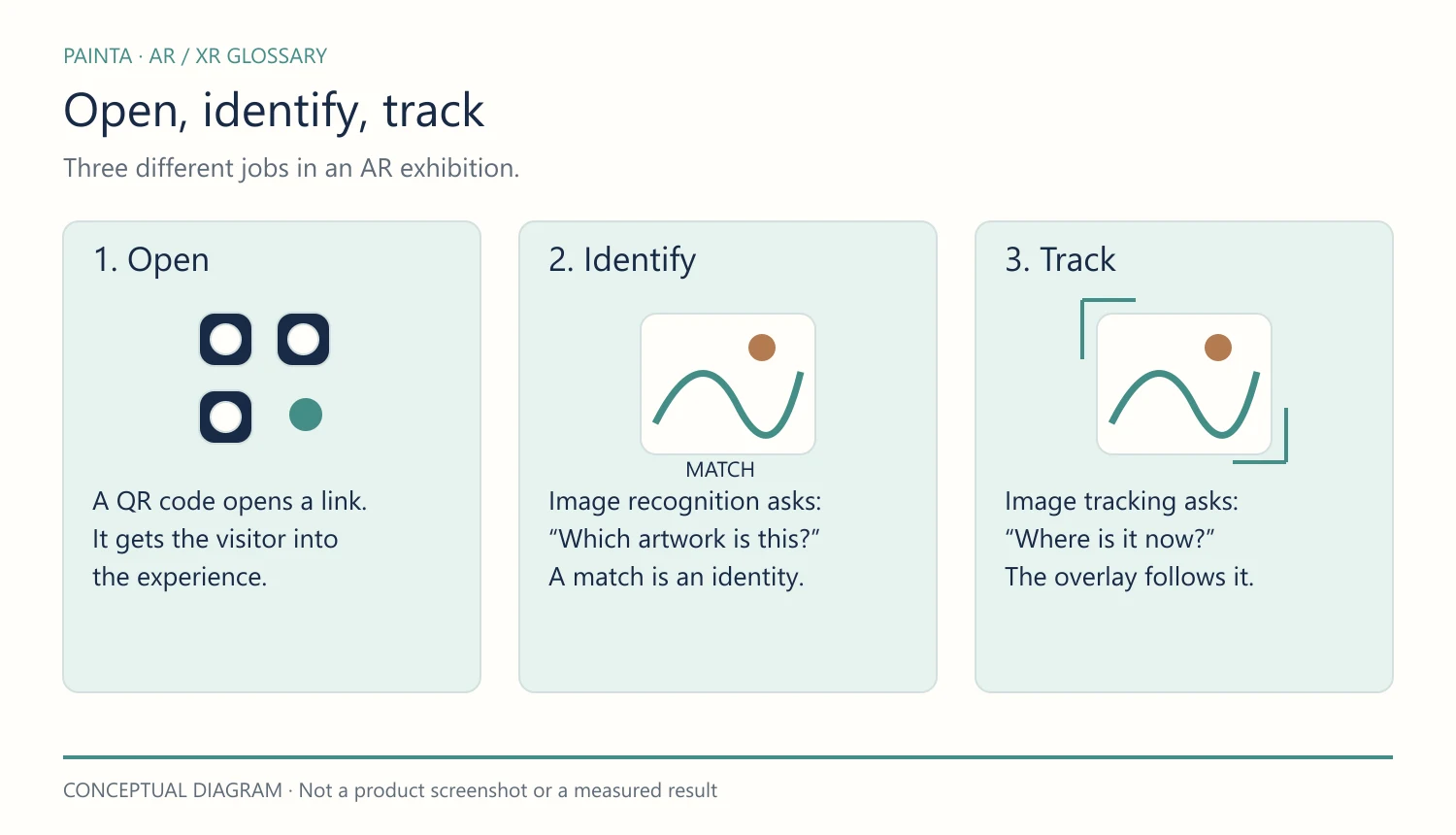
Scanning a QR with a phone camera can open a link. The page may then request camera access and guide the visitor towards an artwork. The code does not contain an entire AR experience simply because it links to one.
One code for a room
A Painta Collection can provide one entry point to a curated group of artworks, with navigation between works. Collections are part of Studio Pro. This is useful when a gallery wants a coherent route without printing a separate entry code beside every work.
A QR is not necessarily the tracking marker
An image-tracked experience may use the artwork itself as its target after the visitor opens the link. A code used only for access and a marker used for spatial tracking perform different jobs.
Make the entry point easy to use
Print at a size visitors can scan from a comfortable distance, keep sufficient contrast and clear space, and test the final sign in its real lighting. Add a short explanation and a readable alternative URL. A working code is only the first step; the destination and visitor instructions must work too.