Marker-based AR uses a predefined visual reference to detect and position digital content relative to something in the physical world.
What counts as a marker?
Depending on the system, the reference may be a designed pattern or a natural image such as a painting. Some documentation reserves marker-based for coded patterns and calls natural-image tracking image-based AR. Check which meaning a platform uses.
A familiar exhibition encounter
A visitor points a phone at a prepared artwork and sees digital content aligned with it. The reference gives the system something identifiable to locate, instead of asking it to establish placement freely in the room.
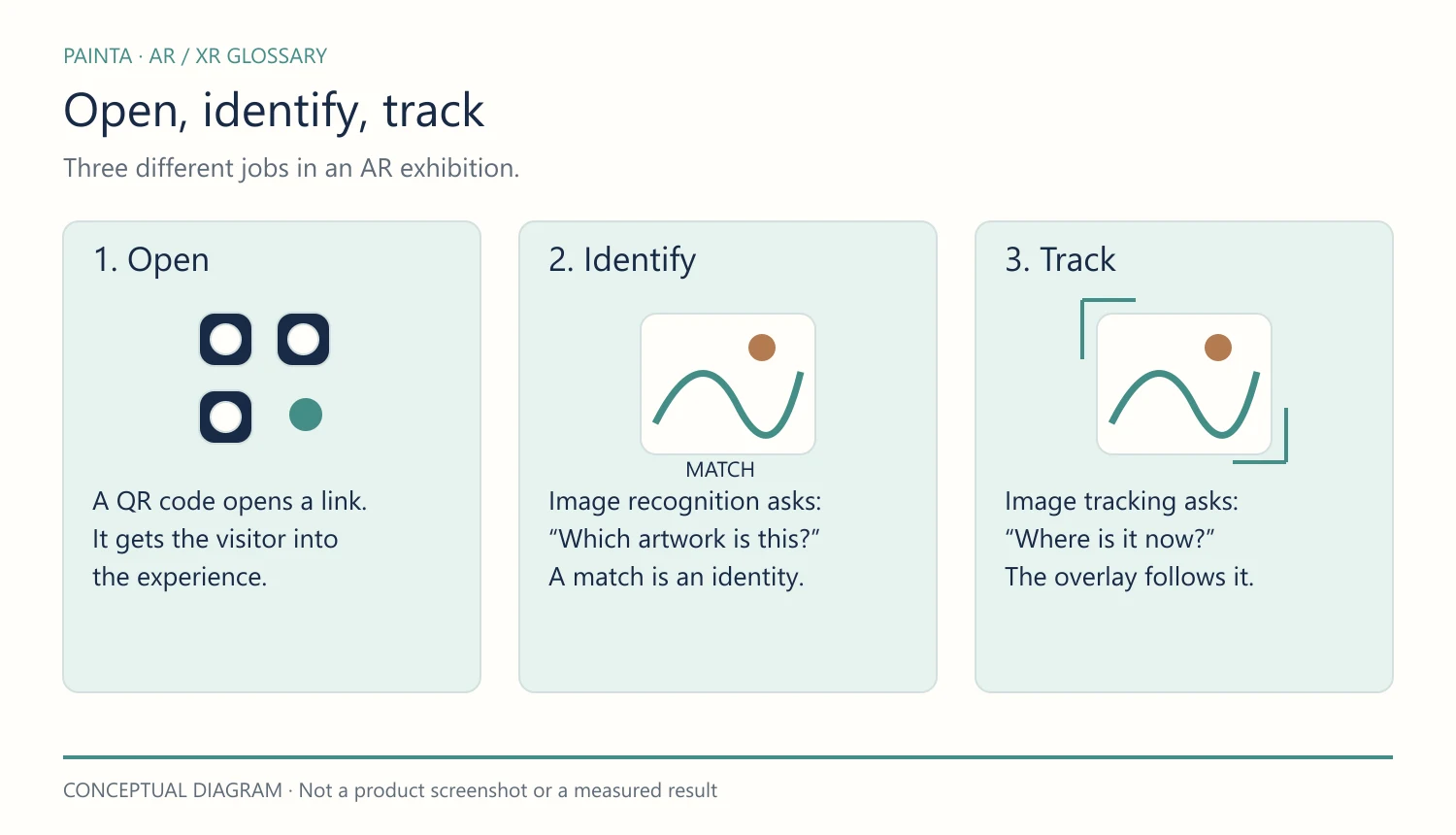
The entry QR may do a different job
A QR printed on a label can open a Painta experience without being the reference that holds the animation in place. The artwork may perform that second role. Explain these steps separately so visitors know whether to aim at the label or the art.
When it works well
This approach suits content that must relate closely to a known physical image. The marker must be visible and recognisable enough for the system to use it. Lighting, reflections, occlusion and viewing angle can all affect the result.