WebAR is augmented reality delivered through a web browser, so visitors can open an experience from a link without installing a dedicated application.
What the visitor does
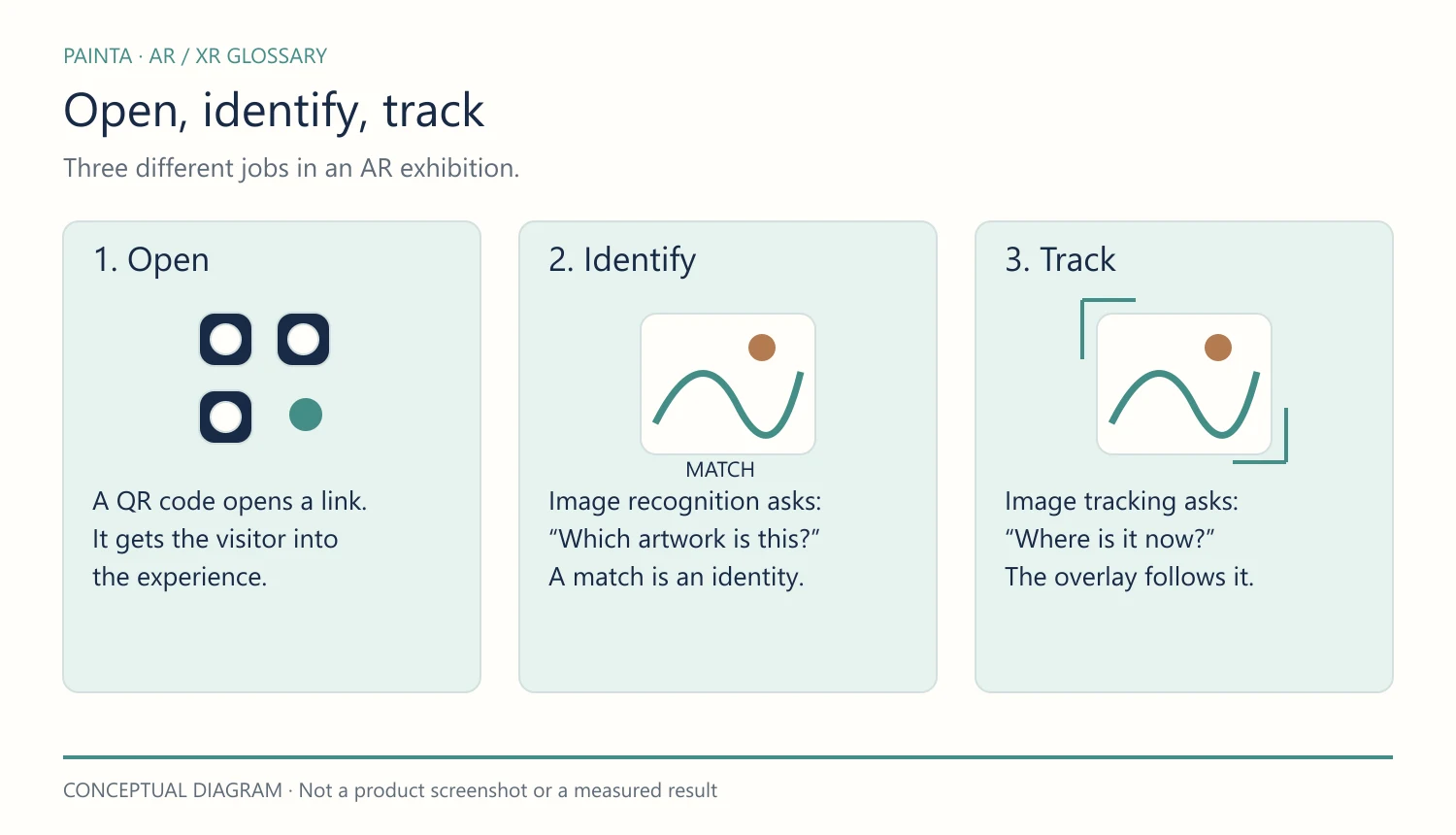
A visitor opens a web address, often through a QR code, then follows the page's instructions. Camera-based experiences need camera permission. The page loads the media and tracking components needed for that particular encounter.
A Painta example
An exhibition label can open an artwork's Painta experience on the visitor's phone. A collection can provide one entry point to several works. The physical artwork remains the focus, while the browser provides access to its digital interpretation.
No installation does not mean no requirements
Connection quality, media size, camera permissions, browser capabilities and device performance still affect the experience. Plan a fallback for visitors who cannot use the camera or whose phone does not support the chosen feature.
WebAR and WebXR are not synonyms
WebAR describes browser-delivered AR. WebXR is a browser API for supported immersive capabilities. Some WebAR experiences use camera access and other web technologies without requiring an immersive WebXR session. Always test the actual experience, not just the technology label.
Related concepts and further reading
Choosing an AR platform for art
Continue with Three.js for a closer look at this part of the experience.
WebGL explains one common graphics layer in browser experiences, separate from camera access and artwork tracking.