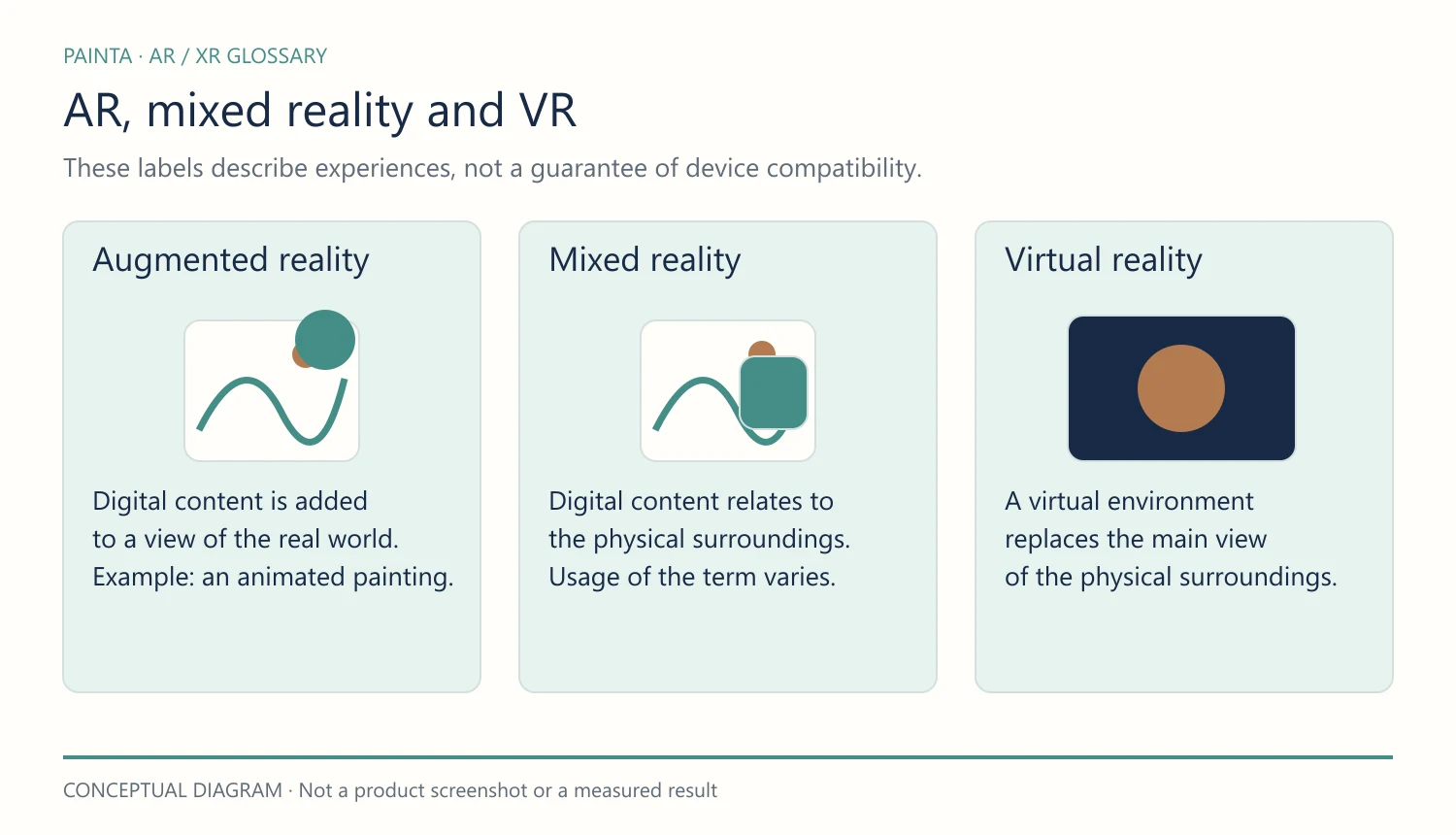
Augmented reality, or AR, adds digital content to a view of the physical world, allowing real objects and digital elements to be experienced together.
The physical work remains present
A painting might gain an animated detail, a sculpture might reveal an interpretation, or an exhibition label might lead to a spatial story. The digital layer can be viewed through a phone, tablet or compatible headset, depending on the experience.
An example with Painta
A visitor opens an artwork's experience and points the camera at the physical work. The added layer can draw attention to a detail or reveal an artistic interpretation. Its value comes from what it helps the visitor notice, not simply from moving on a screen.
AR is not one tracking method
Some experiences follow a prepared image. Others place content in the environment or use location information. Access, recognition and spatial tracking are different parts of the visitor journey.
Keep the encounter understandable
Explain what to open, what to point at and what the visitor can expect. Offer a useful alternative when camera access or device support is unavailable. AR should add meaning without making the original artwork inaccessible.