A draw call asks the graphics system to render a batch of geometry using a particular set of rendering state.
Object count and draw-call count can differ
A model that looks like one sculpture may contain several meshes and material groups. It can require multiple draws, and extra passes such as shadows may add more. Conversely, an instancing workflow can draw many copies of compatible geometry efficiently. Counting visible objects alone does not describe the renderer’s workload.
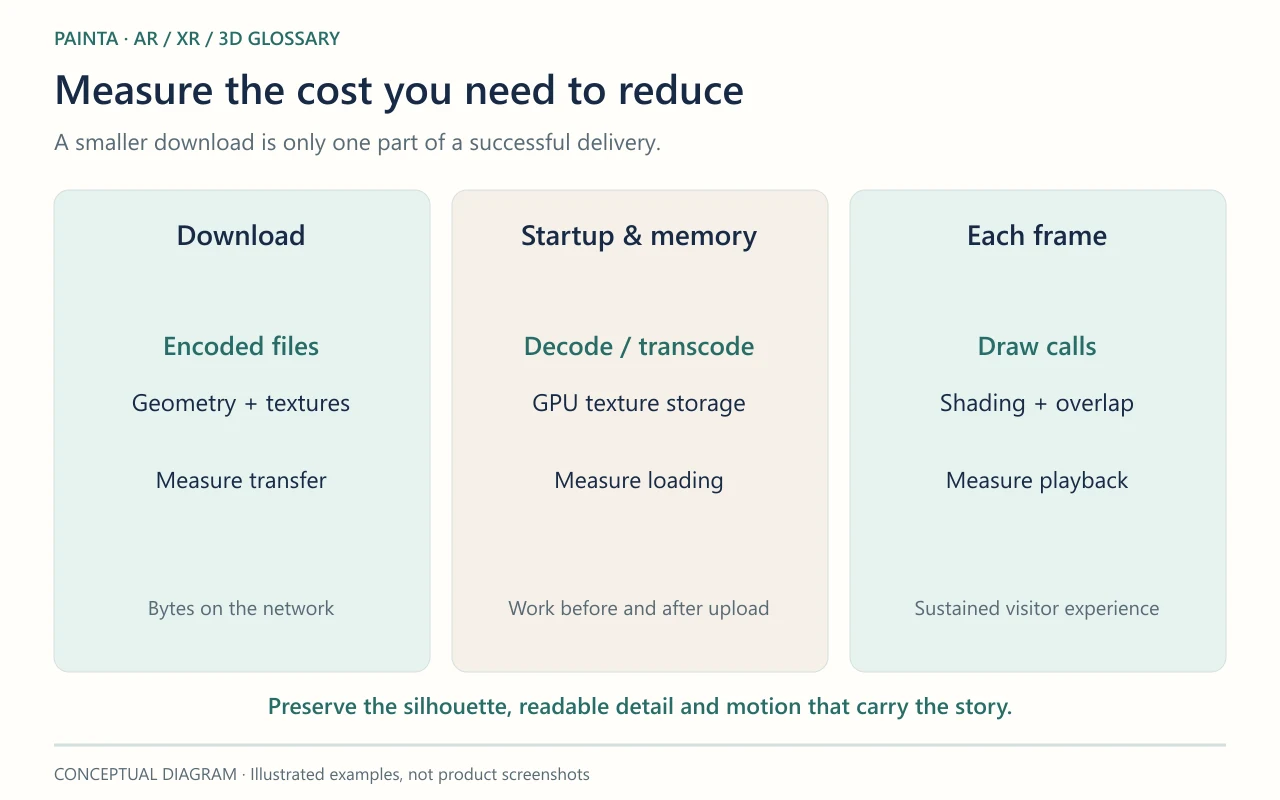
Fewer calls are useful only when they address the bottleneck
Submitting many small batches can add CPU and driver overhead. Combining compatible work may help, but merging everything can complicate independent animation, visibility or materials. Draw calls are only one measure: expensive shading, large textures and transparent overlap can remain costly even after the call count falls.
Look at a repeated ornament
Suppose an AR scene surrounds a painting with twenty matching stars. Reusing geometry and materials gives the renderer more opportunities than twenty separately imported, slightly different assets. Whether batching or instancing is available depends on the authoring and viewing path. Compare actual frame behaviour before and after the change. Keep a separate object when the story needs that star to move, disappear or change material independently.