Render order is the sequence in which a renderer submits objects or drawing operations to build an image.
A drawing sequence, not a physical distance
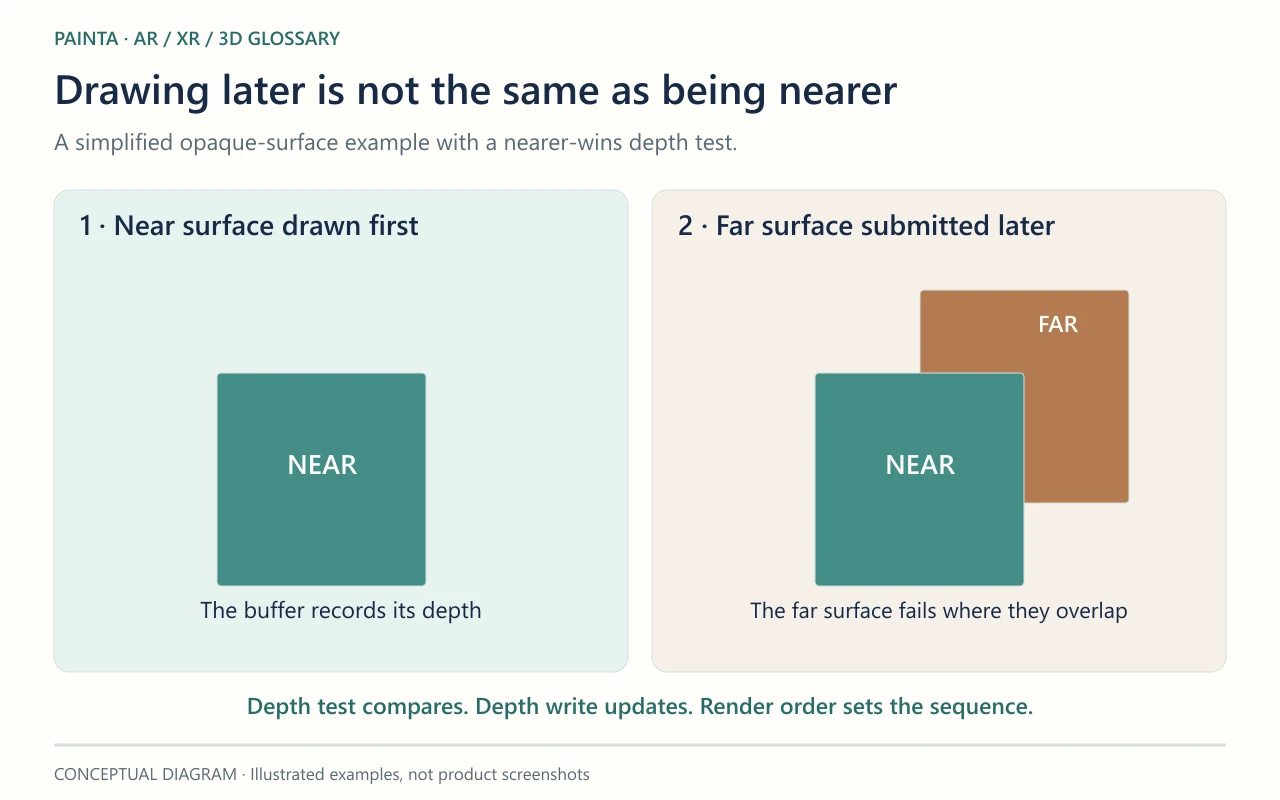
Two objects can keep the same position while the renderer changes which one it draws first. For opaque surfaces, depth testing commonly determines the visible result. For blended transparency, the sequence also affects how colours combine. A higher order value is therefore not a general promise that an element will appear on top of everything.
Different queues can have different rules
In Three.js, renderOrder sorts from lower to higher values, but opaque and transparent objects remain in separate sorting groups. A manual order does not automatically solve intersecting transparent triangles or override depth testing. The application’s layer list, a CSS z-index and a 3D render-order property are also distinct systems, even when their interfaces look similar.
Use a deliberate overlay only when it serves the scene
A caption intended to behave like an overlay may need different depth treatment from a sculpture standing in space. For an artwork detail, first decide whether it should overlap the frame or disappear behind another element. Then check the actual visitor view from several angles and at the relevant timeline moments. Avoid treating a reordered list as proof that the final composition is correct.