Texture compression reduces the storage or graphics-memory cost of texture data, with trade-offs in quality and compatibility.
Download size and graphics memory are different
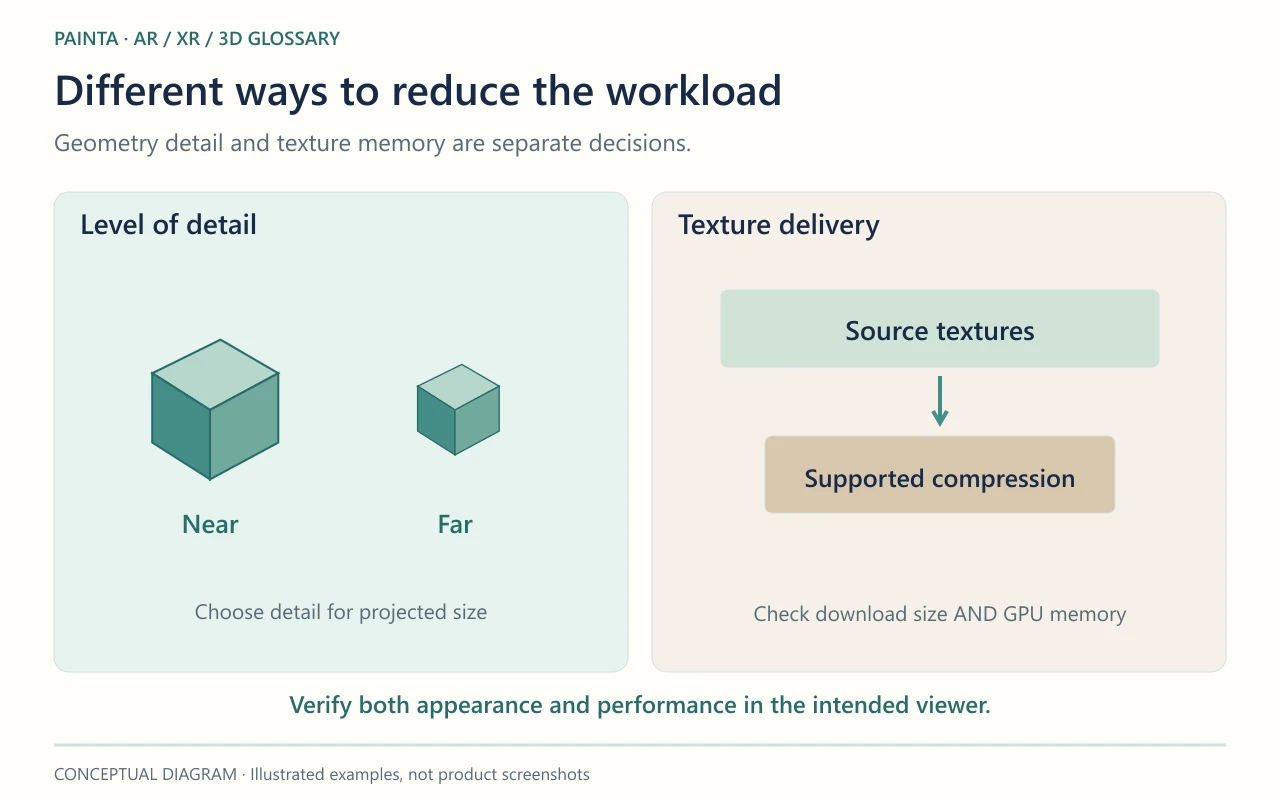
JPEG or WebP can make an image smaller to download, but a renderer commonly decodes it before use. GPU texture compression uses formats that can remain compressed in graphics memory. KTX2 is a container that can carry texture data suited to such workflows; the container alone does not mean every image uses the same compression method.
A smaller file still needs to look right
Fine lettering, soft gradients and transparent edges can reveal compression artefacts quickly. Normal maps are especially sensitive to changes because their pixels describe directions. The appropriate settings depend on the type of map, intended viewing distance and supported loader. A file that passes a structural check still needs visual inspection on the target viewer.
A practical delivery decision
For a Painta model, first remove unused maps and choose sensible dimensions, then evaluate compression supported by the actual import and viewing path. Keep the source textures so the asset can be exported again without repeated lossy recompression. Compare both loading behaviour and appearance on a representative phone; a lower download size is valuable only if the artwork remains readable and the file renders correctly.
Related concepts and further reading
Khronos: KTX texture compression