A small AR pilot can answer a big curatorial question
person
Painta.me
Oct 4, 20267 min read
There is a familiar moment in an exhibition meeting when a promising idea suddenly becomes an enormous project. Someone suggests letting visitors hear an artist describe a painting. Soon the discussion includes headsets, a digital reconstruction of the building, a multilingual guide and a launch film. The original question gets harder to hear.
A small augmented reality pilot keeps that question within reach. What would someone notice in this particular work if they could briefly see a process, hear a voice or compare two states? An artist can ask it about a single canvas. A gallery can ask it before an opening. A museum can ask it while deciding whether a larger commission deserves a budget.
The scale is modest; the judgement does not have to be. A well-chosen work can reveal more about the value of an idea than a room filled with features. The following scenarios are proposals for thinking about a pilot, rather than reports of measured Painta projects.
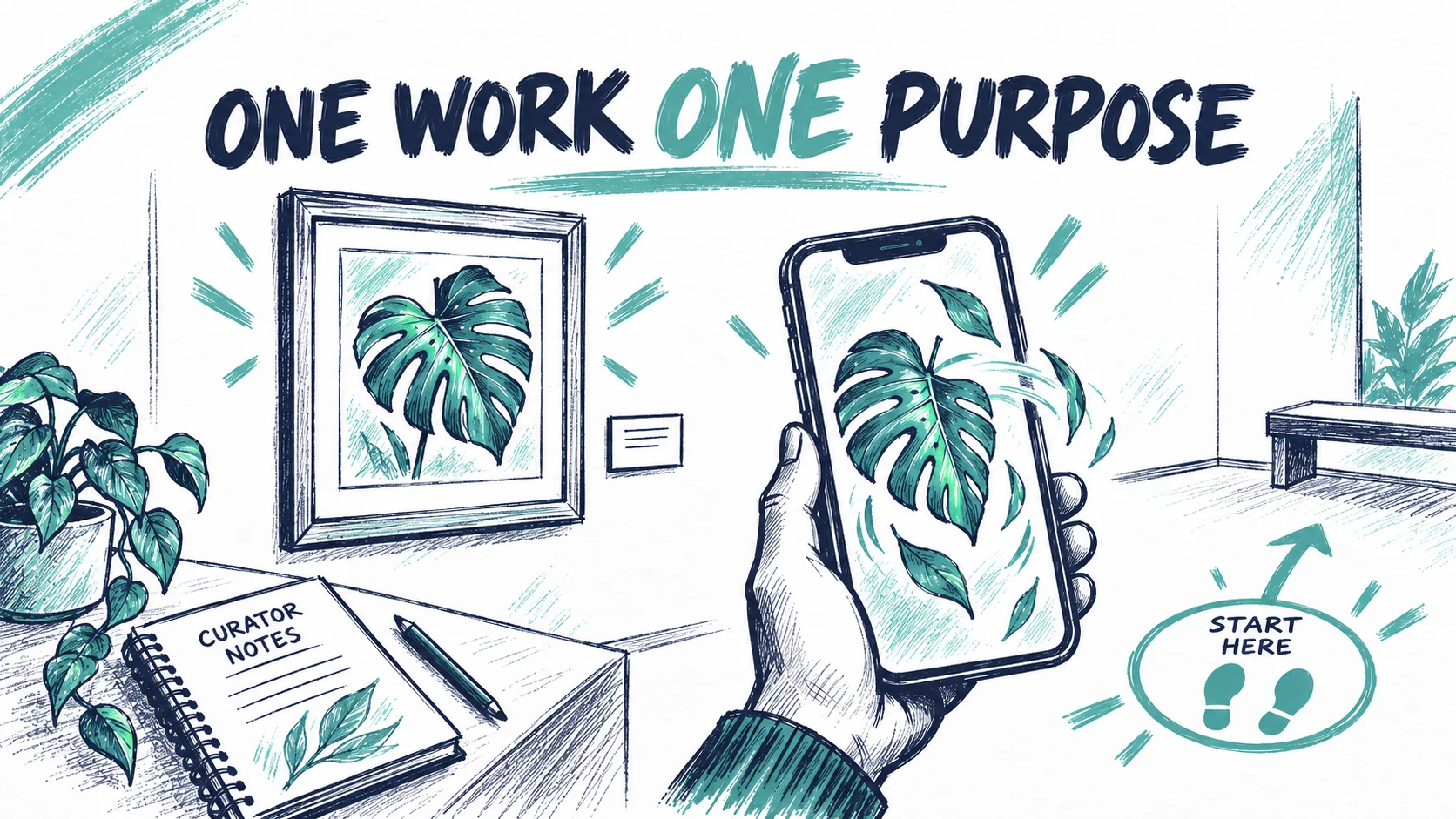
Photo: Painta.me · Original AI-generated editorial illustration
Choose a work with something still to say
An artwork does not need to look unfinished to leave a question open. A painting might conceal a change of composition. A print might depend on a rhythm that the final image only suggests. A sculptural object might have a relationship with a site that visitors cannot see from the gallery.
The strongest starting point is often an existing piece of knowledge. An artist has a recording about an unusual decision. A curator has a documented comparison. A conservator has approved an image that makes a material change legible. That gives the digital layer a reason to exist before anyone chooses an animation style.
Imagine a botanical painting in which the artist deliberately moved a branch to interrupt the viewer's gaze. A brief overlay showing the earlier position could make that decision visible. Once it fades, the visitor can look again at the actual brushwork. The layer earns its place through a specific observation, not through the amount of movement on screen.
Our collection of museum AR examples explores this relationship between the added experience and the object in the room. A pilot is an opportunity to test that relationship on your own terms.
Give the digital layer one main job
An explanation, an artistic extension and a historical reconstruction ask different things of an audience. Trouble starts when they share the same visual language without telling the visitor which is which.
An artist's imagined continuation can be wonderfully free. A claim about a lost architectural feature needs evidence and a way to show uncertainty. A recording of the maker describing a personal decision should remain recognisable as their voice, rather than becoming an anonymous institutional account.
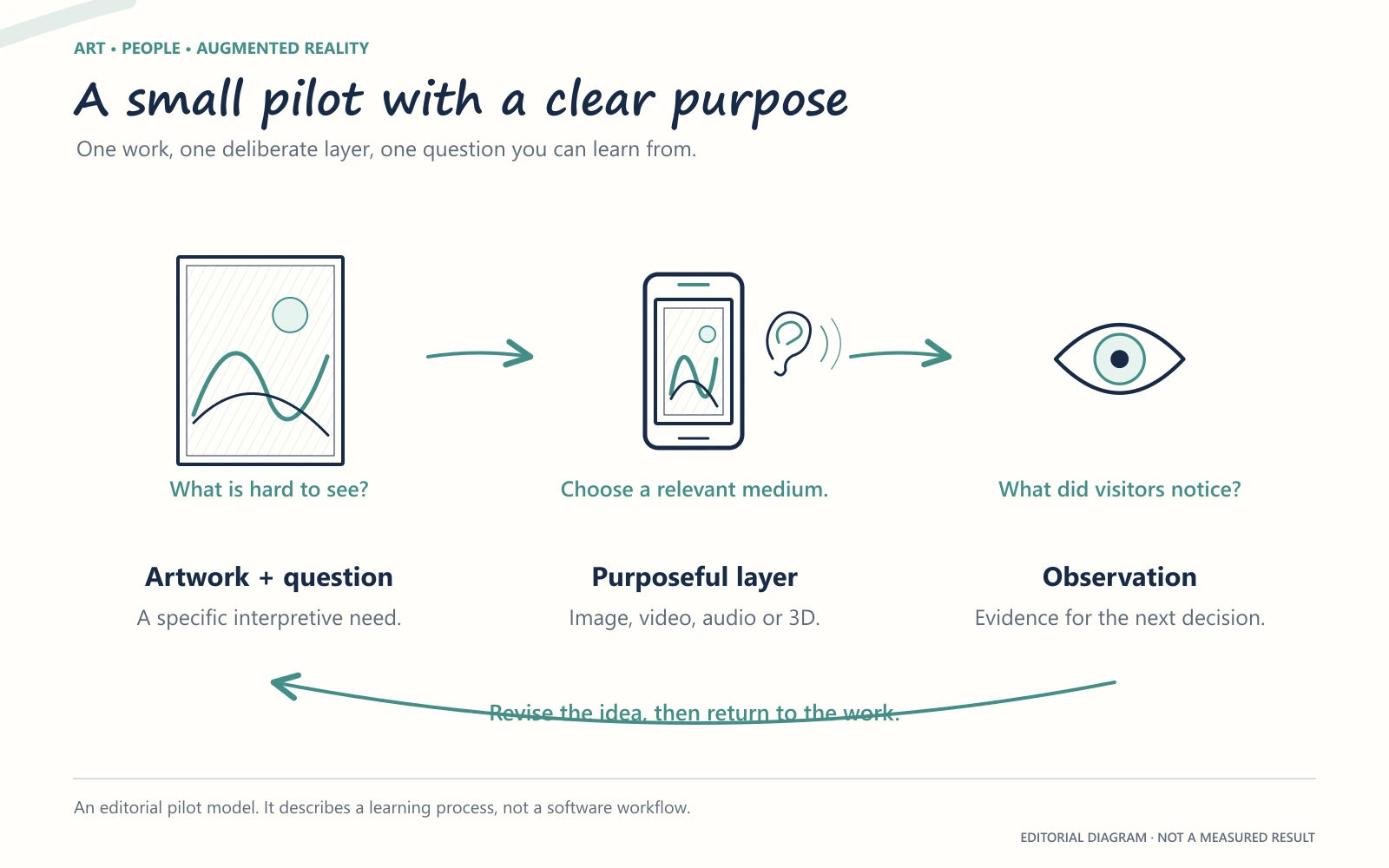
For a first pilot, choose the job you can explain in a sentence. Perhaps visitors will compare the first sketch with the completed painting. Perhaps they will hear a short memory associated with a print. Perhaps an abstract motion will extend the artist's own composition. Additional possibilities can wait until you know whether that first relationship holds together.
A focused pilot connects a real interpretive question with a deliberate layer and an observation that can change the next decision.
This is also where the choice of medium becomes useful. Video, a still image, sound and a 3D model offer different kinds of attention. If the question concerns the atmosphere of a vanished studio, a capture might be appropriate. If it concerns the shape of an object, an inspectable model may matter more. The distinction is explored in our comparison of splats, photogrammetry and 3D models.
Include the ordinary moments around the experience
The visitor's experience begins before anything appears on screen. They notice an invitation, decide whether it interests them, understand what to do and find a comfortable place to stand or sit. These moments deserve the same editorial attention as the animation.
Consider the botanical painting again. A label saying that the artist changed the branch gives a visitor a reason to open the layer. An instruction to scan, without that context, gives them an action but leaves the purpose unexplained. The difference can be a few words rather than another feature.
There should also be a satisfying way to engage without using the camera. A readable comparison or short transcript can carry the central idea. Some visitors will share a phone. Others will prefer the physical work. Those choices should feel like legitimate ways into the exhibition.
The W3C's XR Accessibility User Requirements offer a useful starting point for thinking about alternatives to individual sensory and input demands. They are a discussion of user needs, not a certificate that an exhibition is accessible. Real testing with the people you hope to welcome still matters. Our article on accessible AR exhibitions develops that practical distinction.
Define a useful answer before collecting numbers
It is tempting to judge a pilot by whether people opened it. That tells you something about reach and curiosity. It does not tell you whether the intended relationship became clearer.
For the changed branch, a useful observation might be whether visitors look back at the painting and identify the compositional choice. For an artist recording, you might listen for the question it prompts. For an abstract extension, a conversation about how the physical and moving parts belong together may reveal more than completion time.
You can invite those responses without turning a visit into an exam. A short voluntary conversation, a staff observation and the behaviour of the experience on different phones can each answer a different question. Keep their limits visible: a small pilot gives situated evidence, not a prediction about every visitor to the next exhibition.
An ambiguous result can still be valuable. If people enjoy the movement but miss the connection to the original, the next decision may concern pacing or the label. If the connection is clear but opening the experience is difficult, the access route needs attention. Measuring AR exhibition success offers a fuller way to separate those findings.
Where Painta fits into a considered pilot
Painta provides a visual editor for combining an artwork with media such as images, video, audio and prepared 3D models, and sharing the experience through a web link or QR code. That makes it a possible production setting for the kind of focused experiment described here. The curatorial question, the evidence behind the material and the judgement about whether it belongs remain yours.
An artist who already has suitable media may want to assemble a first version. A team that needs help preparing it can review the artwork and exhibition preparation services. The useful first conversation concerns the work, the intended audience and the materials available. A complex model or a particular device requirement needs its own feasibility discussion. The setup packages use finished media supplied by you; creating a new animation is a separate package. Preparation fees are one-time charges, separate from the Painta plan, hosting and any Legacy Mode licence.
Before expanding the pilot, keep a record of the approved media, the intended behaviour and the checks performed on the actual viewing setup. Decide who will look after it during the exhibition. These details make the creative decision easier to sustain and connect naturally with commissioning AR for a museum.
One work is enough to begin. Choose the question you would most like a visitor to carry back to the artwork, and let that question determine the size of the first experience.
Founder and creator of Painta.me. Artist in my spare time and AR art enthusiast. Building tools to help artists bring their creations to life through augmented reality.
A short weekly email with new Painta.me tools, practical AR ideas, artist opportunities, and ways to make your work easier to create, publish, and share. Useful even if you haven't created your first piece yet.
What you'll get
1
New AR tools
See what's new inside Painta.me and how it can help you create faster.
2
Artist opportunities
Open calls, featured works, community updates, and ways to get your art seen.
3
Practical AR ideas
Simple techniques to create, publish, and share better augmented reality pieces.
auto_awesome
Ready to create?
Create your free account, prepare an artwork and share it in augmented reality. Choose a paid plan when you need more.