AR exhibitions after closing day: what comes next?
person
Painta.me
Oct 2, 20266 min read
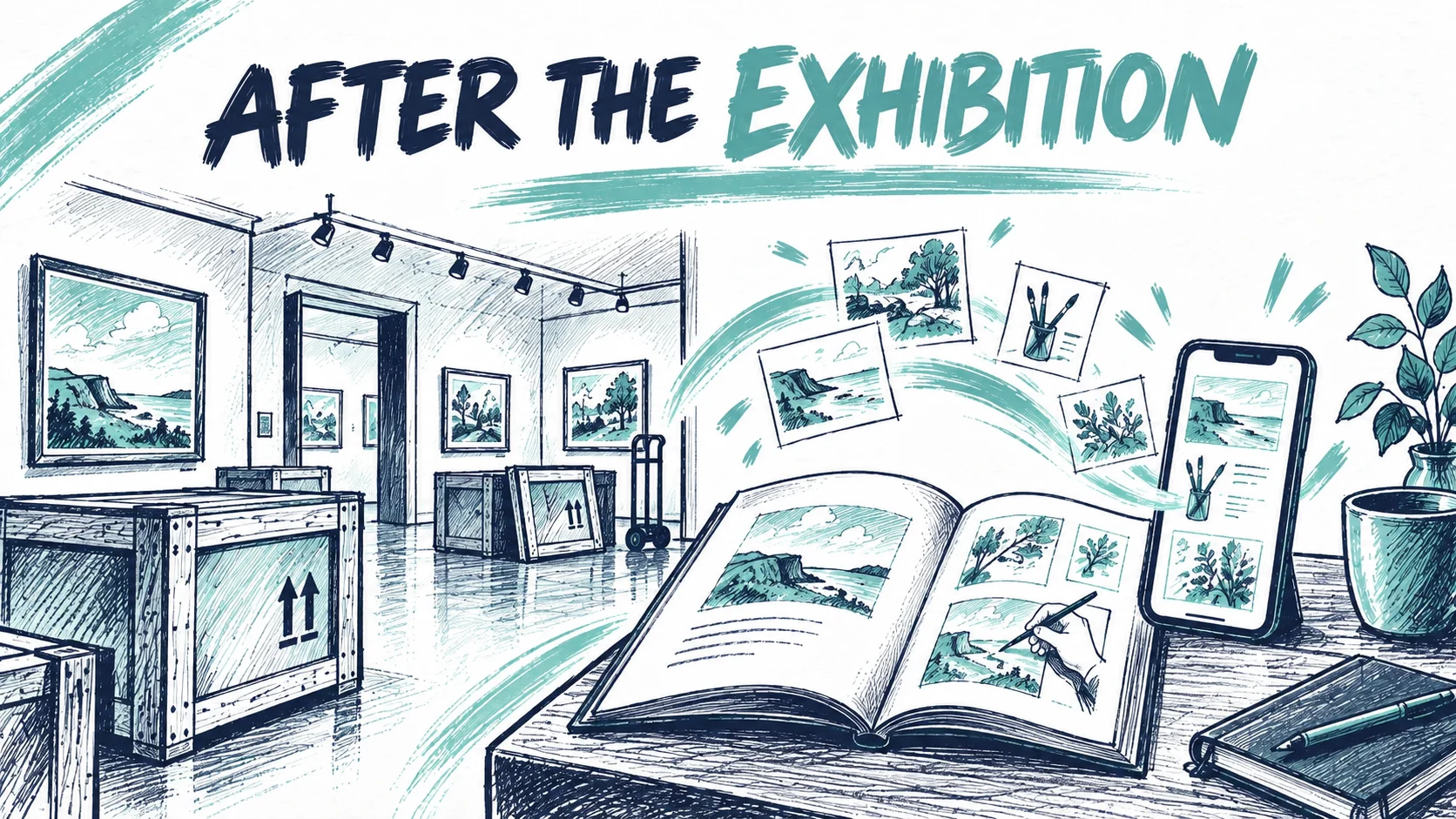
Closing day is full of practical decisions. Labels come down. Works leave the building. A room that held a particular conversation becomes an empty space, ready for something else.
The exhibition's digital material has a less obvious ending. An artist's recording may still deserve to be heard. A sequence that explained a detail may remain useful. A visitor may finally open a saved link a week after the show has closed.
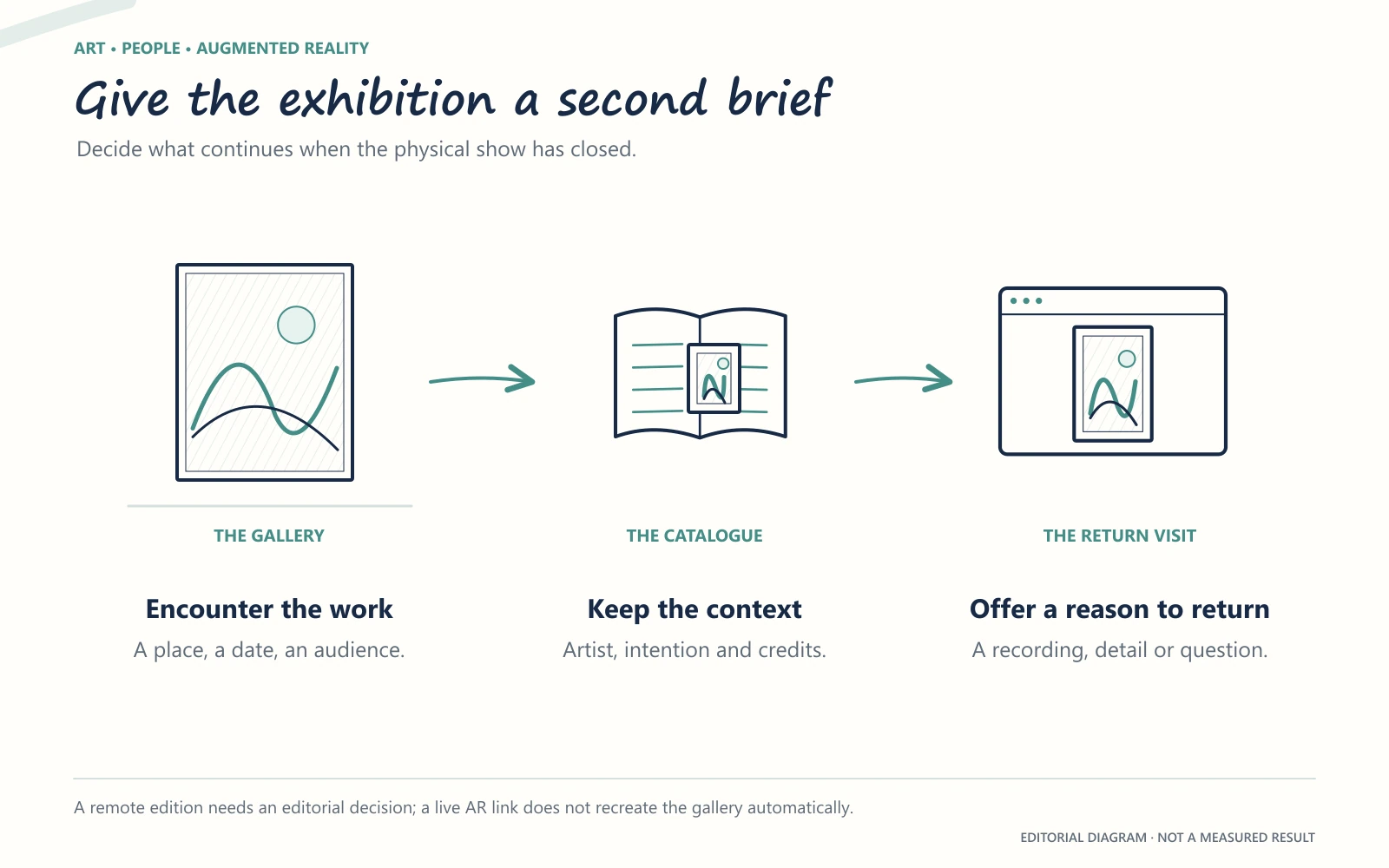
For an exhibition that included augmented reality, this is a moment to edit. What should continue? What needs a new introduction? What only made sense beside the original work?
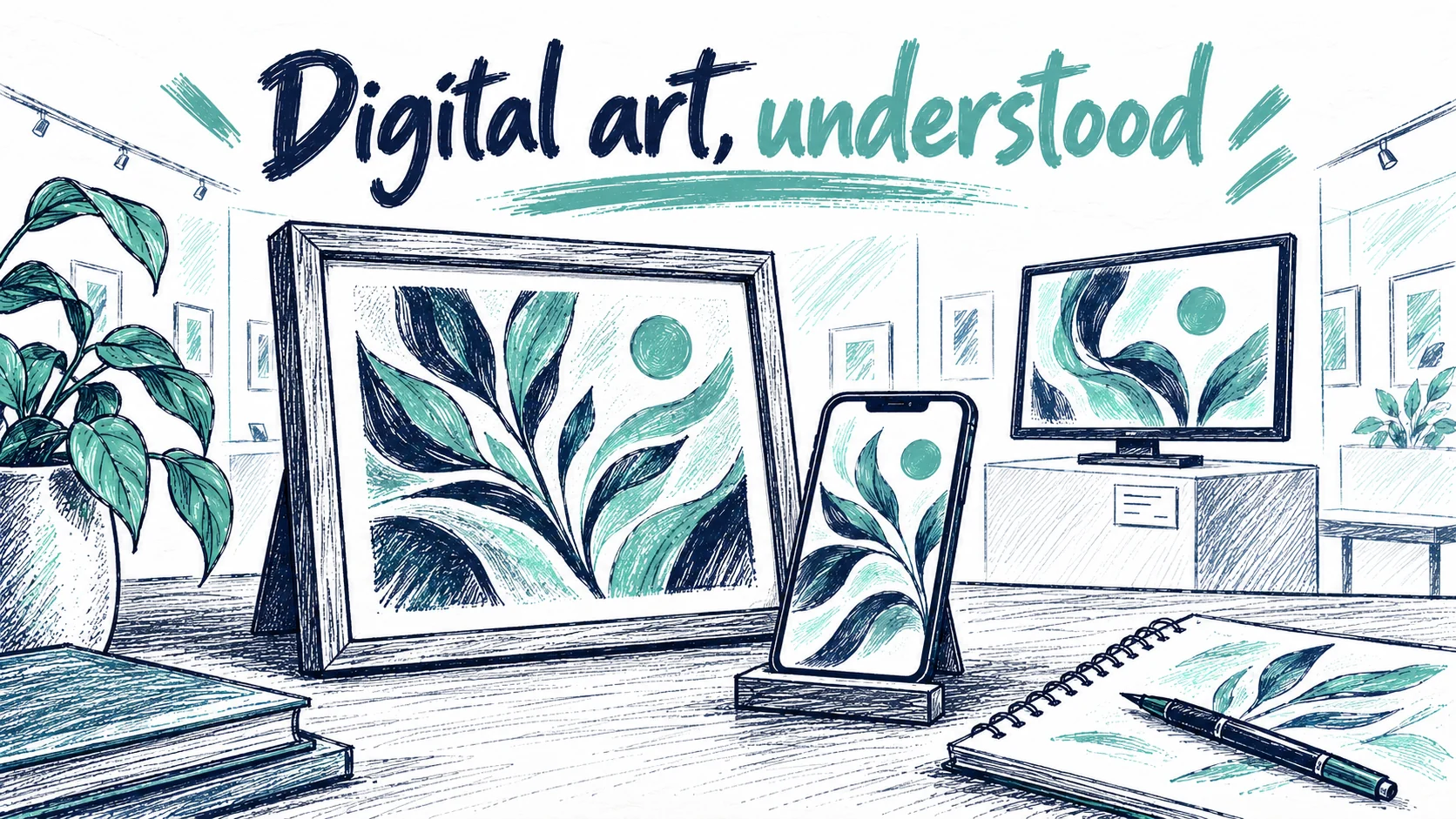
Photo: Painta.me · Original AI-generated editorial illustration
A thoughtful answer can give the exhibition a useful second life. It does not require pretending that the gallery is still open, or that a visit can be reproduced in full.
Think about the person returning
Someone returning to an exhibition online may have a very small intention. They want to remember an artist's name, show a friend one work, or hear the recording they skipped in a noisy room. Their needs differ from those of a visitor arriving for the first time.
That suggests a different editorial approach. A page does not have to recreate the entrance, floor plan and sequence of every room before offering something worthwhile. It can give the returning visitor a clear route to the work they remember, with enough context for the friend who was not there.
The Cleveland Museum of Art describes the ArtLens app as a resource before, during and after a visit, including ways to revisit saved artworks and collection content. The example makes a useful point: a museum can design explicitly for the time after someone leaves.
For a temporary exhibition, the same intention can begin with a much smaller selection of material.
A catalogue and an experience can support each other
A catalogue gives a work a stable place in the exhibition's story. It can identify the artist, explain the curatorial argument, record the dates and acknowledge the people involved. A digital experience can offer something that the catalogue's still image cannot: movement, an artist's voice, or a change between states.
The relationship needs to be clear. A reader should know whether they are about to see documentation of the exhibition, a revised remote version of an AR work, or a separate interpretation made afterwards.
Getty's Persepolis Reimagined was introduced in April 2022 as a web experience accompanying an exhibition at the Getty Villa. Its online form connected selected objects to a reconstructed setting. That relationship between exhibition and website offers a useful reference for planning a digital companion.
A gallery's version might be more intimate: a short recording in which an artist returns to a choice visible in one work. The value comes from the connection, not from how much content survives the exhibition.
Decide what depends on being there
An AR layer aligned to a painting assumes that someone can point a camera at that painting, or an appropriate reference. After the exhibition, that assumption may no longer hold for the visitor following an old link.
The team should decide what the remote encounter is meant to be. Perhaps it is a documented video of the original experience. Perhaps an explanatory image and an audio recording are more useful. Perhaps the artwork can be encountered through a reproduction, if that suits the artist's intention and the agreed use of the material.
These possibilities are editorial and production choices; they should not be assumed to happen automatically when a show closes. A site-specific piece may deserve documentation rather than a claim that the same work is available anywhere.
Our discussion of what a digital replica can preserve offers a related distinction. A useful representation does not need to imply that it contains the original encounter in full.
An exhibition’s digital material can take on a new role after closing. Keep the context clear and decide what remains meaningful away from the room.
Let the artist help shape the second version
An artwork's digital layer may include timing, sound and a relationship to the room that matter to its meaning. The decision to retain, shorten or document it belongs in a conversation with the artist.
That conversation can produce a more interesting online edition. An artist might explain what changed between making the work and exhibiting it. A curator might add a note about a question the exhibition raised. An educator might identify a detail that proved difficult to explain and write a clearer introduction.
These are possible editorial contributions, not results claimed for a particular exhibition. They illustrate why an afterlife needs a person responsible for it. Simply keeping the files online does not decide what they should now say.
The credits should travel too. Sound, animation, writing, translation and curatorial work remain part of the project even when the installation has been dismantled.
Make the next invitation specific
For a gallery, the exhibition may have opened conversations with potential collectors. For a museum, it may have introduced a subject to people who want to learn more. For an artist, it may have helped someone recognise a continuing body of work.
Each situation suggests a different next step. An artwork page might link to related works, an exhibition essay or a clearly described enquiry route. A museum might invite readers to explore a collection theme. The page does not need to ask for every possible action at once.
Our article on the AR art collector experience considers the questions that arise when someone wants to understand a work more closely. An enquiry becomes more useful when the surrounding material has helped the person ask a specific question.
This is an invitation, not evidence of conversion. A saved link, a replay and a purchase enquiry are different signals. Treating them separately makes the digital extension easier to evaluate, as we discuss in measuring an AR exhibition's success.
Give the ending an owner
An exhibition page should make its dates clear after closing. Any directions written for the old gallery arrangement need review. Someone should know which links remain active, which media have been retained and where an enquiry will arrive.
The scope can be modest. A carefully maintained selection is preferable to promising an indefinite online exhibition without time or resources to support it. If an experience will be available for a limited period, that can be part of the invitation from the beginning.
Longer-term decisions about maintaining the digital work deserve their own plan. Our AR art conservation article looks at that responsibility. The immediate task after a show is more editorial: help a returning visitor understand what is here now.
Painta can be part of that plan through public web experiences and QR entry points, with image, video, audio and suitable 3D layers. The artist or institution still chooses what remains meaningful away from the original setting and who will look after it.
If you are preparing an exhibition, it is worth discussing its second version while the first is still taking shape. Explore Painta's options for exhibitions for the work you want visitors to return to.
Founder and creator of Painta.me. Artist in my spare time and AR art enthusiast. Building tools to help artists bring their creations to life through augmented reality.
A short weekly email with new Painta.me tools, practical AR ideas, artist opportunities, and ways to make your work easier to create, publish, and share. Useful even if you haven't created your first piece yet.
What you'll get
1
New AR tools
See what's new inside Painta.me and how it can help you create faster.
2
Artist opportunities
Open calls, featured works, community updates, and ways to get your art seen.
3
Practical AR ideas
Simple techniques to create, publish, and share better augmented reality pieces.
auto_awesome
Ready to create?
Create your free account, prepare an artwork and share it in augmented reality. Choose a paid plan when you need more.